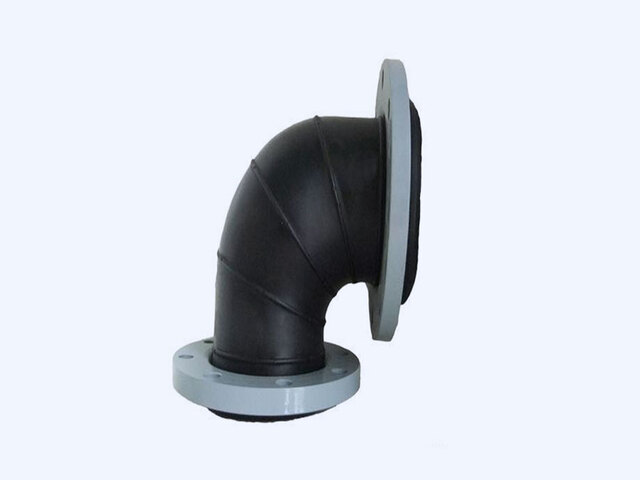
Rubber Flexible Joint
Rubber flexible joint, also known as rubber expansion joint, flexible rubber joint, soft joint, vibration absorber, pipeline vibration damper, shock‑absorbing bellows, etc., is a pipeline fitting featuring high elasticity, high air tightness, medium resistance and weather resistance. This product takes advantage of rubber’s elasticity, high air tightness, medium resistance, weather resistance and radiation resistance. It is compounded with high‑strength polyester cord fabric with strong thermal stability via oblique cross‑laying, then vulcanized under high pressure and high temperature in a mold.
Reducing Rubber Flexible Joint
A pipeline fitting with elasticity, high air tightness, medium resistance and weather resistance. This product takes advantage of rubber’s elasticity, high air tightness, medium resistance, weather resistance and radiation resistance. It is compounded with high‑strength polyester cord fabric with strong thermal stability via oblique cross‑laying, then vulcanized under high pressure and high temperature in a mold.
Joint Size: DN32mm – DN4000mm
Features
High internal density, capable of withstanding high pressure, and excellent elastic deformation performance.
Rubber flexible joint is also called rubber joint, flexible rubber joint, rubber expansion joint, vibration absorber, rubber vibration damper, etc. Main types include JGD and KXT.
This product is a tubular rubber component composed of inner and outer rubber layers, cord layers and steel wire rings, vulcanized under high temperature and high pressure, then combined with metal flanges or parallel loose sleeves.
With high elasticity, high air tightness, medium resistance, weather resistance and radiation resistance, it can reduce vibration and noise, and compensate for thermal expansion and contraction caused by temperature changes. It is widely used in various pipeline systems.
Advantages
Vibration damping, noise reduction, lightweight, non‑toxic.
Applications
Connection with pumps and valves; pipelines with strong vibration; pipelines with frequent temperature changes.
Applicable Media
Seawater, fresh water, cold and hot water, drinking water, domestic sewage, crude oil, fuel oil, lubricating oil, refined oil, air, gas, steam, granular and powdery materials.
Connection Methods
Generally threaded connection, flange connection, clamp connection, etc.
Installation Instructions
- Rubber flexible joints are strictly prohibited from being installed beyond the displacement limit.
- The pipeline must be equipped with fixed supports or brackets, and the force of the fixed bracket must be greater than the axial force. For vertical and overhead installation, appropriate fixed and load‑bearing brackets shall be installed at both ends to prevent pulling off under pressure during operation.
- Installation bolts shall be tightened symmetrically and gradually to avoid local leakage.
- Keep away from heat sources during installation. It is strictly prohibited to use media that do not meet the product requirements.
Application Scope
Due to its excellent comprehensive performance, flexible rubber flexible joints are mainly used for raw water and sewage lifting and conveying, water supply and cooling circulating water in thermal power plants, condensate water in metallurgy, chemical medium conveying in chemical industry, cooling and dilution in petrochemical industry, and flexible connection between long and short distance pipelines in other industries.
With high wear resistance, rubber is also suitable for low‑temperature conveying of granules, powders and gases in all industries.